
Tommy's Catering vs Chef & I Catering: The Ultimate 2025 Comparison

Updated: Feb 16
Tommy's Catering vs Chef & I Catering: The Ultimate 2025 Pittsburgh Catering Comparison for Weddings and Corporate Events
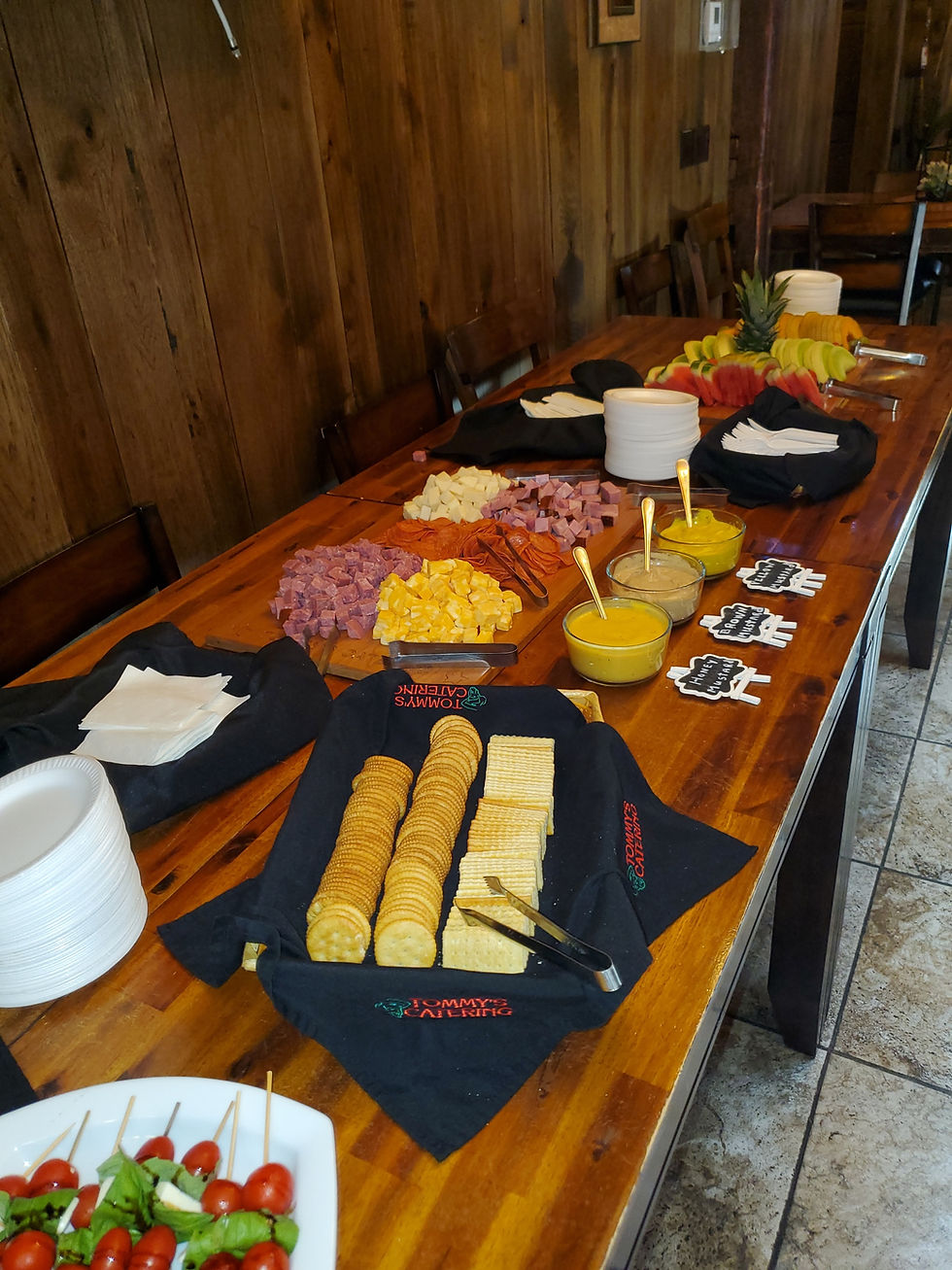
Tommy's Catering vs Chef & I Catering is a practical guide for Pittsburgh couples and corporate planners who need a clear, comparison-driven way to choose a caterer in 2025. This article explains who each name represents in the local catering ecosystem, the service types they address (wedding catering, corporate catering, on-site BBQ/grill, hors d'oeuvres and small-party service), and how careful evaluation of menus, staffing, and pricing saves time and reduces event risk. Many planners struggle to translate menu promises into on-site performance; this comparison focuses on operational indicators—menu sourcing, customization, tasting access, staff roles, and the practical limits of guest counts—to help readers make an informed booking decision. You will find side-by-side service criteria, three detailed EAV tables comparing wedding, corporate, and pricing attributes, and checklists that highlight what to ask during proposals. Throughout, the article weaves documented attributes of Tommy's Catering—such as scratch-made menus, scheduled tasting events, donations to Meals on Wheels, and capacity for roughly 50 to 1,000 guests—so you can weigh specific strengths against the general expectations for other providers in Pittsburgh.
What distinguishes Tommy's Catering and Chef & I Catering in Pittsburgh's catering market?
At a high level, differentiators between local caterers hinge on experience, in-kitchen practices, and event logistics; Tommy's documented profile emphasizes full-service execution and from-scratch preparation. Experience functions as a credibility signal: providers that emphasize consistent menu preparation and professional staffing are more likely to deliver reliable timelines and predictable guest experiences. Menu provenance—whether dishes are prepared from scratch on-premises or sourced partially pre-made—affects taste consistency, dietary flexibility, and the ability to customize menus quickly for last-minute changes. Operational scale matters too, since capacity to handle events from tens to many hundreds informs staffing models, equipment needs, and coordination with venues across Greater Pittsburgh. Below are concise differentiators designed for quick scanning and featured-snippet clarity.
Tommy's documented differentiators include scratch-made menu items, scheduled tasting events, donation of leftovers to Meals on Wheels, and a full-service offering tailored for 50–1,000 guests.
Service model differences often appear as full-service execution versus limited-delivery or buffet-only approaches among other providers.
Customization and dietary accommodation capacity (vegetarian, gluten-free, etc.) separate caterers who can adapt menus from those who offer fixed package choices.
These distinctions lead directly into a closer examination of company histories and values, and how mission-driven practices such as community donations affect trust and selection.
How do Tommy's Catering's history and values compare to Chef & I Catering's?
Tommy's publicly stated background highlights a long-standing local presence and community-oriented practices that shape operational values and client expectations. Founded and operating since the late 1990s in the Greater Pittsburgh area, Tommy's emphasizes full-service event delivery, community engagement through food donations, and a kitchen approach that favors most items prepared from scratch. These elements create a value proposition centered on food quality, event reliability, and local accountability—attributes planners cite when prioritizing caterers for weddings and formal corporate events. When comparing to other providers, focus on whether they publish similar commitments (scratch-made food, scheduled tastings, staff-led setup and cleanup), because those operational choices translate into fewer service gaps on event day. Understanding these value signals helps planners judge whether a caterer’s culture aligns with a client’s event priorities.
What unique value propositions set Tommy's Catering apart in 2025?
Tommy's highlights practical, client-facing UVPs that matter during planning and execution.
Kitchen-first approach—preparing most items from scratch—boosts freshness and allows chefs to adapt flavors and ingredients to specific preferences or dietary needs.
Scheduled tasting events give couples and planners a chance to validate menu choices before finalizing orders, reducing uncertainty about portioning and presentation.
Capacity to serve events roughly from 50 to 1,000 guests indicates operational scale for both intimate and large gatherings, which affects hired staff levels and equipment on site.
Charitable practices such as donating leftover food to Meals on Wheels demonstrate community engagement that can resonate with socially conscious clients.
Each UVP contributes to a client experience that emphasizes customization, quality, and community-minded service rather than one-size-fits-all packages.
How do Tommy's Catering and Chef & I Catering compare in wedding catering services?

Wedding catering comparisons rest on menu flexibility, tasting access, service style (plated vs buffet), and the caterer’s role in event coordination. A clear definition: wedding catering combines food production, on-site service, and event logistics to create a cohesive guest experience; the mechanism through which quality is delivered includes menu customization workflows, tasting availability, and coordinated staffing. Clients benefit when these components are explicit in proposals because predictable service reduces stress on the wedding day. In the absence of public competitor specifics, evaluate each vendor against these operational markers: menu customization degree, tasting policies, staffing and setup responsibilities, and documented capacity. The EAV table below condenses wedding-specific attributes to help planners compare offerings quickly.
The wedding service attributes table highlights core items planners should verify in any catering quote.
Service Aspect | Attribute | What to Confirm |
Menu Customization | Flexibility level | Can you substitute entrees, stations, or hors d'oeuvres without fee? |
Tasting Availability | Scheduled tastings | Are tasting events available and how many people can attend? |
Guest Capacity | Operable range | What guest counts does the caterer routinely support? |
On-site Service | Setup/service/cleanup | Does the price include staff for setup, service, and cleanup? |
This table shows which questions reveal real service depth rather than marketing language; the next section examines menu customization in more detail.
What wedding menu customization options do both caterers offer?
Menu customization refers to the range of choices a client can make around entrees, sides, hors d'oeuvres, service style, and dietary substitutions; the mechanism that enables customization is a flexible kitchen process and open communication during planning. Typical customization includes plated dinners, buffet stations, station-style BBQ/grill service, and tailored hors d'oeuvres menus that match event tone and theme. Dietary accommodations—vegetarian, vegan, and gluten-free options—are part of modern wedding planning and should be explicitly listed in proposals with substitution details and labeling for service staff. To compare vendors, request examples of past custom menus and sample timelines for integrating special dietary needs; seeing menu templates alongside a clear pricing approach for substitutions clarifies true flexibility.
Types of customization commonly requested include plated vs buffet service, themed stations, on-site grill stations, and tailored hors d'oeuvres assortments.
Menu items should be adaptable to accommodate vegetarian, gluten-free, and other dietary requirements without compromising presentation.
Sample menus and prior event case studies help validate a caterer’s ability to execute bespoke wedding menus.
These menu options naturally connect to how on-site services and coordination are structured for a seamless wedding experience.
How do on-site services and event coordination differ between the two?
On-site services and event coordination cover staffing roles, timeline management, venue liaison, and post-event cleanup; their importance lies in converting a planned menu into a well-timed guest experience. Effective coordination assigns roles for lead server or event manager, kitchen head, and setup/cleanup crew, and includes a run-of-show that aligns food service with photography and ceremony timing. Professional staff who understand venue rules and logistics reduce the risk of delays and help implement contingency plans for dietary issues or last-minute guest increases. When evaluating providers, verify who acts as the venue liaison, whether the caterer supplies service ware and linens, and how the timeline is rehearsed before the event.
Lead Event Coordinator: Confirm who manages the run-of-show and vendor coordination.
Staffing Ratios: Ask about server-to-guest ratios and back-of-house coverage.
Logistics & Cleanup: Verify setup responsibilities and whether cleanup is included.
Understanding staffing and coordination completes the wedding-service picture and prepares planners to compare quotes more meaningfully.
What are the differences in corporate event catering between Tommy's Catering and Chef & I Catering?

Corporate catering prioritizes speed, consistency, and scalability across formats like boxed lunches, buffets, and plated service; its defining mechanism is efficient production paired with predictable delivery windows. For corporate events, menu simplicity that maintains quality at scale—boxed lunches for meetings or buffets for all-hands—reduces logistical complexity while allowing dietary accommodations to be handled through labeled options. Professional service adds value in conferences where plated meals or staffed buffets elevate the attendee experience. The EAV table below compares corporate attributes planners should consider when assessing provider fit for business events.
Corporate Service | Attribute | Typical Offering |
Delivery & Setup | Turnkey logistics | Drop-off or fully staffed setup depending on event scale |
Menu Types | Formats available | Boxed lunches, buffets, plated meals, hors d'oeuvres stations |
Dietary Accommodations | Handling process | Labeled substitutions and pre-ordered special meals |
Event Size | Scale capability | Ability to serve small meetings to large corporate events |
This comparison highlights operational questions that directly influence cost, speed, and attendee satisfaction for corporate planners.
How do menu selections and dietary accommodations compare for corporate events?
Corporate menus focus on formats that balance efficiency and attendee preference; menu selection mechanisms include pre-ordering, standardized boxed options, and buffet rotations for networking events. Common corporate offerings include boxed lunches with labeled dietary options, buffet lines with clear allergen signage, and plated luncheons where timing and portion control matter. The process for handling dietary restrictions typically requires advance notice and labeled alternatives to avoid cross-contamination; ask vendors about how they document and confirm special meals before service. Ensuring clear communication channels for dietary needs reduces risk and supports compliance with corporate wellness or allergy policies.
Typical corporate menu types include boxed lunches, buffet stations, and plated service for VIP functions.
Dietary accommodations should be confirmed in writing and managed with labeled plating or separate service lines.
Pre-order workflows and guest tracking systems improve accuracy and reduce service delays.
These menu and accommodation practices link directly to how many guests a caterer can handle and the staffing model required.
What professional services and event sizes can each caterer handle?
Capacity planning ties staffing, equipment, and delivery workflows into a reliable event outcome; a documented guest-range capability is a practical measure of scalability. For example, Tommy's publicly notes the ability to serve events of approximately 50 to 1,000 guests, which implies robust equipment, scalable staffing plans, and experience coordinating with larger venues. For smaller corporate meetings, a reduced crew and modular menu simplify logistics, while large conferences require dedicated kitchen teams, multiple service stations, and a manager to coordinate vendors. When requesting proposals, confirm minimum and maximum guest thresholds, staging areas required at the venue, and whether the caterer provides service ware and rentals or coordinates them for you.
Confirm Guest-Range: Ask for the caterer’s typical and maximum event sizes.
Staffing Plan: Request an outline of staff roles per guest tier.
Equipment & Rentals: Verify what the caterer provides versus what the venue must supply.
Clear answers to these items reduce surprises and ensure event staffing aligns with guest expectations.
How do pricing and value propositions of Tommy's Catering and Chef & I Catering compare in Pittsburgh?
Pricing models in catering generally fall into custom quotes based on guest count and menu selection or fixed packages with set inclusions; the reason this matters is that pricing transparency determines how accurately planners can budget and compare bids. A descriptive definition: value in catering is the combination of food quality, staff professionalism, included services (setup, service, cleanup), and capacity to meet special requests. Tommy's approach, as documented, emphasizes customizable menus and custom quotes for events across a substantial guest range, which suggests pricing is tailored rather than fixed-price per plate. The EAV table below shows pricing attributes to ask about so you can compare true value rather than headline per-person numbers.
Before the table, consider these key pricing questions: what line items are included, how substitutions affect totals, and whether rentals or service fees are separate.
Pricing Component | Attribute | What to Request |
Quote Type | Custom vs package | Is the quote tailored to guest count and menu selections? |
Inclusions | Line-item clarity | Does price include staffing, setup, service, cleanup, and rentals? |
Transparency | Change policies | How are substitutions, headcount changes, or gratuities handled? |
Value Signals | What to compare | Food sourcing, scratch-made practices, and tasting availability |
This EAV table clarifies which elements indicate better value and which are often omitted from superficial comparisons.
What pricing models and transparency do both caterers provide?
Both boutique and full-service caterers commonly use custom quoting driven by guest counts and menu choices; a custom quote mechanism enables pricing accuracy but requires explicit line items to avoid surprises. Best-practice transparency includes a line-item list of included services (cook/chef, servers, setup, cleanup, disposable or rental items), stated policies for guest-count changes, and clear notes on dietary substitutions. When comparing providers, request sample quotes for the same hypothetical guest count and menu to reveal differences in assumed inclusions. This comparison technique exposes hidden fees and helps planners choose the vendor whose quote reflects true event scope.
Ask vendors to provide detailed line-item quotes for the same menu and guest count.
Verify policies for headcount changes and substitution fees in writing.
Use tasting events or sample menus to evaluate whether quote assumptions align with actual portion sizes and presentation.
Analyzing quote structure in this way gives a clearer sense of comparative value than per-person estimates alone.
How do customer reviews and reputation influence perceived value?
Customer reviews and documented event photos serve as proxies for operational consistency and service quality; reviewers often highlight reliability, food taste, and staff professionalism—factors that materially influence perceived value. To interpret reviews effectively, prioritize recent feedback that matches your event type (wedding vs corporate) and look for patterns rather than single outliers. Verified reviews with photos or case studies provide stronger signals than anonymous comments, and detailed accounts of how a caterer handled dietary needs or last-minute changes reveal operational resilience. Evaluating reputation alongside transparent pricing and tasting experiences helps planners triangulate true value.
Prioritize recent, event-type-matching reviews.
Look for documented photos and detailed testimonials that describe execution.
Consider patterns about timeliness, taste consistency, and staff responsiveness.
These review-evaluation practices combine with pricing transparency to create a fuller picture of vendor value.
What are the service areas and community involvement of Tommy's Catering versus Chef & I Catering?
Service area and community engagement shape logistics and brand trust; geographic reach determines travel fees, arrival windows, and venue familiarity, while community activities signal local commitment. Tommy's documented service footprint covers the Greater Pittsburgh area, explicitly including Harrison Township and Vandergrift, Pennsylvania, which indicates local venue experience across suburban and urban settings. Community engagement practices such as donating leftover food to Meals on Wheels signal a social responsibility stance that can enhance local reputation and client trust. These geographic and civic attributes inform both logistical feasibility and the caterer’s cultural fit for clients who prioritize local sourcing or charitable impact.
Verify whether the caterer frequently services your specific venue or area to reduce potential travel or staging issues.
Ask about typical transit and setup timeframes for your venue’s location to align schedules.
Confirm whether the caterer’s community engagement or local partnerships influence menu sourcing or local staffing.
Understanding service area and CSR practices helps planners anticipate logistical requirements and select caterers whose values align with their event goals.
Which Pittsburgh areas and venues do each caterer serve?
Documented service areas indicate the practical limits of same-day logistics and repeat venue familiarity; Tommy's specifically lists the Greater Pittsburgh area and includes Harrison Township and Vandergrift, which suggests experience across a range of local venues. Familiarity with particular venues reduces setup surprises because caterers know loading docks, kitchen access, and venue rules, streamlining coordination. When evaluating any caterer, request references for similar venues or event types to confirm hands-on experience. Venue familiarity should be weighted heavily for complex sites where staging and timing are critical to the event flow.
How does community engagement, like food donations, enhance Tommy's Catering's profile?
Community engagement—such as donating leftover food to Meals on Wheels—serves as both a reputational differentiator and an operational practice that reflects food-handling policies. The relationship between CSR activities and client trust is direct: visible charitable practices imply disciplined surplus management, safe food-handling protocols, and a values-driven organization. For socially conscious clients, these practices can tip the balance when service, price, and menu quality are otherwise comparable. Highlighting documented donations in proposals or marketing can also support client storytelling and event impact reporting.
Why should clients choose Tommy's Catering over Chef & I Catering in 2025?
Yes — there are factual reasons a planner might prefer Tommy's based on documented operational attributes. Tommy's combination of scratch-made menu emphasis, scheduled tasting events, capacity range for roughly 50–1,000 guests, and explicit accommodation of dietary needs creates a clear value proposition for clients who prioritize food quality, customization, and full-service event execution. Beyond kitchen practices, professional staff for setup, service, and cleanup reduce on-site coordination burden for planners and hosts, enabling smoother timelines and consistent guest experiences. The following bullets summarize the most compelling, evidence-based advantages to consider when a choice comes down to service execution and menu control.
Scratch-made menus: Leads to fresher, more adaptable dishes that can be customized for dietary needs.
Scheduled tastings: Gives clients practical assurance about menu selection, portioning, and presentation.
Scalable capacity and professional staff: Supports both intimate weddings and large corporate events with full-service staffing.
Community engagement: Donations to Meals on Wheels reflect disciplined surplus handling and local commitment.
These advantages suggest clear next steps for planners who value taste, customization, and accountable service.
What are the key advantages of Tommy's Catering's customizable menus and scratch-made food?
Scratch-made food yields practical benefits beyond flavor: it supports substitutions for allergies and dietary preferences, allows seasonal ingredient choices, and typically improves presentation consistency. Customizable menus let hosts craft experiences that align with event themes, cultural preferences, or corporate branding, and such flexibility is especially valuable for multi-course plated dinners or themed stations. For example, offering an on-site grill station rather than a pre-plated alternative changes guest perception and creates an interactive element that enhances engagement. Clients should ask for sample menus showing how substitutions are handled and whether tasting events can validate final selections.
How do professional staff and event experiences differ to benefit clients?
Professional staff translate plans into timed execution: lead servers coordinate courses with ceremony timelines, kitchen managers maintain food temperature and portion control, and cleanup crews restore the venue afterward. This staffing model reduces the host’s operational burden and mitigates common failure points such as late service or food quality drops during long events. When requesting proposals, planners should ask about staff roles, server-to-guest ratios, and contingency plans for unexpected guest increases. If a tasting event is available, use it to confirm staff presentation standards and service cadence.
For readers ready to move forward, request a custom quote or schedule a tasting to validate menu choices and staffing plans—these next steps align with the article's primary goal of helping readers secure accurate proposals and dependable execution.
Request a custom quote: Ask for a line-item proposal based on your guest count and menu selections.
Schedule a tasting: Use a tasting to confirm flavors, portion sizes, and presentation.
Confirm staffing and logistics: Verify who will manage the run-of-show and venue liaison responsibilities.


Comments